Mining performance is decided by what happens on the ground. Equipment has to perform, plants have to run reliably, and teams need to make the right decisions with the information available to them.
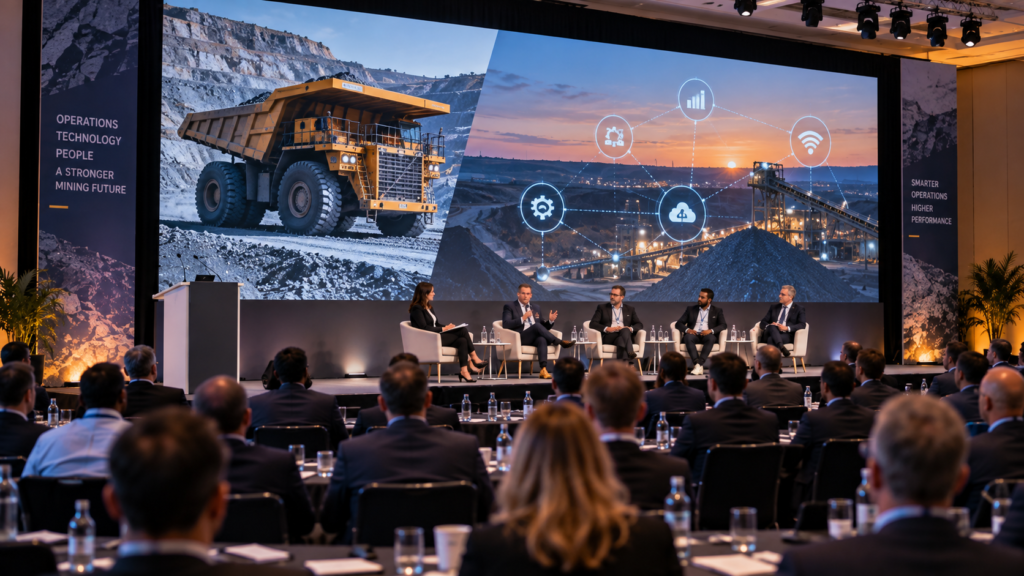
That was the focus of the 9th Canada Mining Operational Performance & Technology Summit, held in Toronto on 9-10 September 2026. The event brought together professionals from mining operations, processing, maintenance, technology, asset management and related areas. Across two days, speakers shared practical approaches to improving plant performance, reducing downtime, increasing recovery and dealing with operational constraints.
Why the 9th Canada Mining Operational Performance & Technology Summit mattered
Mining companies are adopting more automation, AI, connected equipment and digital systems. The challenge is making those investments work in actual operating environments.
The summit focused on that challenge. The event covered mine-to-plant value, ore variability, maintenance and production alignment, downtime, fleet utilisation and asset lifecycle management. It also looked at infrastructure readiness and workforce capability for automated operations.
The discussions were not limited to technology itself. Speakers also looked at the practical issues that can affect implementation. These included fragmented data, legacy systems, infrastructure constraints, and workforce adoption.
Key discussions from the 9th Canada Mining Operational Performance & Technology Summit
The two-day event covered topics across mining operations and technology. From Canada’s critical minerals position to AI-driven decision-making, the sessions looked at both immediate operational problems and longer-term changes in the industry.
Day 1: Mining operations, digital transformation and asset performance
The first day covered Canada’s mining outlook before moving into OT, digital transformation, equipment diagnostics, electrification, intelligent sensing and asset utilisation.
Canada Mining at a Turning Point
Speaker: Douglas Morrison, President & CEO, CEMI – Centre for Excellence in Mining Innovation
Douglas Morrison opened the event with a discussion about the current state of Canadian mining. He looked at Canada’s role as a global supplier of critical minerals and the factors that could strengthen that position. The discussion covered mine permitting, infrastructure delivery, processing capacity, and workforce development. Collaboration between federal, provincial, and Indigenous stakeholders was also part of the session. The conversation then looked towards the outlook for Canada’s mining industry by 2035.
Stop Building Roadmaps No One Executes: A Real-World Approach to OT
Speakers: Kyra Meyer, Digital Mines & OT Global Leader, IAMGOLD; John Kwarta, Strategic Account Executive – Glencore, Schneider Electric
An OT roadmap can look good on paper and still fail at the site level. This session examined why that happens. Kyra Meyer and John Kwarta focused on starting with operational pain points instead of beginning with a technology discussion. They also covered a framework that moves from inventory to execution. The discussion looked at how companies can bridge the gap between planning and action. It also outlined the characteristics of an OT roadmap that can actually be executed.
From Prefeasibility to Production: Why Mining Digital Transformations Stall—and How to Scale What Works
Speaker: John Kwarta, Strategic Account Executive – Glencore, Schneider Electric
Many digital, AI, and automation projects show results at an early stage. Problems can appear when companies try to scale them into full production environments. This session looked at some of the reasons behind that gap. Infrastructure readiness and fragmented data were among the issues discussed. Site-level constraints can also limit value capture. The session also examined technology, operations, and workforce alignment. The broader focus was on moving beyond isolated initiatives and turning successful projects into wider performance gains.
Culture of Full Asset Potential Driving Operations Reliability
Speaker: Felipe de Brito Pereira, Operations Vice President, AngloGold Ashanti
Felipe de Brito Pereira focused on people and continuous improvement as part of operations reliability. The session looked at employee engagement and how it can support improvements across the system. It also considered the role of a technology roadmap in amplifying results. The Full Asset Potential methodology was another key part of the discussion. It was presented as a way to create a constant refresh for site teams. The session connected technology with the people and improvement practices needed to support operational performance.
Data Strategy, Integration & Interoperability
Speaker: Julio Rafael Jove Prado, Manager – Business Intelligence, Agnico Eagle Mines Limited
Mining operations often rely on several different systems. This session looked at the need to connect ERP, OT, and mine planning systems rather than keeping them in separate silos. Julio Rafael Jove Prado discussed unified data platforms and enterprise-wide visibility. The session also stressed interoperability over proprietary ecosystems. This can help prevent vendor lock-in and make modular technology upgrades easier. Cloud and advanced analytics were also discussed in relation to decision-making.
PANEL DISCUSSION: Real-World Lessons on Scaling Digital Transformation in Mining
Speakers: Prajit Goswami, Senior Digital Transformation Consultant, Schneider Electric; Laura Mottola, Vice President Business Excellence, Torngat Metals; Christopher Warren, Director of Energy, Mining & Resources Policy, Toronto Region Board of Trade; Don Duval, Head of Mining, Evok Innovations. Moderator: John Kwarta, Strategic Account Executive – Glencore, Schneider Electric
The panel looked at what helps digital transformation projects move beyond the proof-of-concept stage. Interoperability and legacy systems were among the issues discussed. The speakers also considered the disruption that can come with implementation. Another part of the conversation focused on what worked, what failed, and what companies should consider when starting or expanding a digital transformation journey. The discussion kept the focus on real implementation rather than innovation in isolation.
Maximizing Equipment Productivity Through Diagnostics
Speaker: Lazar Vlacic, Diagnostic Engineer, Haver & Boecker Niagara
Equipment diagnostics can give operations teams a clearer view of equipment condition and performance. Lazar Vlacic discussed different diagnostic systems during the session. These included point-in-time and continual approaches. The presentation also looked at when each type can be useful. It covered the advantages and disadvantages of different equipment monitoring methods. The focus was on understanding which diagnostic approach fits a particular requirement and how diagnostics can support equipment performance and efficiency.
Selective Mining & Electrification: The Lamaque BEV Journey and Value Creation at Ormaque
Speaker: Philippe Groleau, Technical Services Director, Eldorado Gold Corporation
Philippe Groleau shared the Lamaque BEV journey and the work at Ormaque. The session covered challenges associated with Lamaque underground mining. It also looked at the advantages of electrified haulage and the infrastructure needed to implement battery-electric vehicles. Selective mining at Ormaque was discussed through the drift-and-slash method. Other areas included dilution reduction, geological control, and ground support. Change management and lessons learned from the project were also part of the presentation.
Mining in the 5G Era: Autonomous Fleets and Smart Operations
Speakers: Juergen Probstfeld, Sr. Consulting Sales Engineer, Ericsson Canada; Jason Falovo, Vice President & General Manager, Ericsson Canada
The session looked at the role of 5G in autonomous fleets and smart mining operations. Juergen Probstfeld and Jason Falovo brought the connectivity side of mining technology into focus. The discussion fitted into the wider shift towards connected and autonomous operations. It showed how wireless infrastructure forms part of the technology environment supporting modern mining. The topic was particularly relevant alongside the summit’s discussions about automation and the growing use of connected equipment across mining operations.
Ore Body Knowledge-Driven Intelligent Sensing for Enhanced Mine Decision Making
Speaker: Kamran Esmaeili, Professor, University of Toronto
Kamran Esmaeili examined AI-driven and autonomous sensing technologies for understanding ore, waste, and rock mass conditions. The session looked at continuous characterisation and the use of high-resolution sensing data. That information can feed predictive models covering grade, fragmentation, rock strength, dilution, stability and processing performance. The presentation also connected the data with mine planning, drilling and blasting, material handling and processing. The overall focus was on reducing uncertainty, risk and cost by giving teams more useful information for decisions across the mining operation.
PANEL DISCUSSION: Asset Utilization and Lifecycle Cost: Extending Equipment Performance
Speakers: Valérie Ouellet, Principal Adviser Quality and Laboratories, Rio Tinto; Philippe Groleau, Technical Services Director, Eldorado Gold Corporation; Juan Schettini Arcieri, Maintenance Mobile Equipment Manager – Cerrejón Mine, Glencore. Moderator: John Kwarta, Strategic Account Executive – Glencore, Schneider Electric
The panel examined the difference between expected and actual asset utilisation. It also looked at lifecycle cost and equipment performance. Speakers discussed how targeted strategies can affect production output and maintenance spending. The conversation also considered approaches to lifecycle management that had not delivered the expected results. Rather than looking only at whether equipment was available, the discussion considered how effectively assets were being used and what that meant for production and maintenance.
Day 2: Equipment, data and autonomous operations
The second day moved into more specific operational applications. The sessions covered tyre management, chemical analysis, procurement, tailings, operator performance and agentic AI.
How is technology an enabler to optimise the life cycle of tyres in mining?
Speaker: Juan Schettini Arcieri, Maintenance Mobile Equipment Manager – Cerrejón Mine, Glencore
Juan Schettini Arcieri looked at how technology can support the lifecycle of mining tyres. The session covered predictive maintenance through IoT and the use of sensor data for tyre performance optimisation. It also considered sustainability and circular economy applications. The discussion focused on how information from sensors can support better decisions around tyre performance and maintenance. This placed a specific equipment challenge within the broader discussion about using technology to improve asset performance.
Quality Control in Chemical Analysis: More Than A Nice-To-Have, A Necessity
Speaker: Valérie Ouellet, Principal Adviser, Quality and Laboratories, Rio Tinto
Valérie Ouellet presented an overview of laboratories and quality management in Rio Tinto’s aluminium division. The session focused on the value of quality control in mining and metallurgical operations. It also highlighted the importance of accurate and precise chemical analysis. Reliable analysis provides an important basis for decisions in these industries. The presentation therefore looked at laboratory quality as a necessary part of operations rather than something that can be treated as an afterthought.
Buying Performance, Not Price: Vendor Selection as an Operational Lever
Speaker: Obinna Mbadozie, Mining Projects Engineer, Vault Minerals
Obinna Mbadozie examined vendor selection from an operational perspective. The session compared total cost of ownership with purchase price and looked at where lifecycle costs can appear after the initial purchase. It covered requirements trackers, weighted technical scoring, and evidence-based assessment of proposals. The presentation also addressed situations where choosing the higher bid can make sense when total cost and risk are considered. Sole-source awards, common vendor selection problems, and the importance of an audit trail were also discussed.
A New Approach to Eliminating Mine Tailings Liability
Speaker: Douglas Morrison, President & CEO, CEMI – Centre for Excellence in Mining Innovation
Douglas Morrison examined how technology can help reduce mine tailings risks and environmental liabilities. The session also looked at innovation across the mining value chain. Areas included productivity, energy efficiency, automation, and circular economy solutions. The discussion covered lessons from supporting more than 70 innovation projects across Canada. Critical minerals recovery, water management, and footprint reduction were also included. The session further discussed MICA-2 and its role in accelerating the adoption of market-ready technologies and encouraging international collaboration.
Leveraging Data to Improve Operator Performance at Vanscoy Potash
Speaker: Brad Marcoux, Continuous Improvement Coordinator, Nutrien
Brad Marcoux shared the approach used at Vanscoy Potash to improve operator performance with data. The session focused on performance insights from downtime data. It also looked at frontline engagement and continuous improvement. The presentation covered results and lessons learned from the work. Future application was another part of the discussion. The example showed how operational data can be used to understand downtime and support improvement efforts at the frontline.
Industrial Procurement in Practice: From Models to Market Reality
This brainstorming session focused on the gap between procurement models and what happens in the market. It was part of the second day’s discussions on practical mining operations and decision-making.
PANEL DISCUSSION: Execution Matters: Finding Balance between Mining Ambition and Operational Reality
Speakers: Douglas Morrison, President & CEO, CEMI – Centre for Excellence in Mining Innovation; Kyra Meyer, Digital Mines & OT Global Leader, IAMGOLD; Brad Marcoux, Continuous Improvement Coordinator, Nutrien; Felipe de Brito Pereira, Operations Vice President, AngloGold Ashanti. Moderator: John Kwarta, Strategic Account Executive – Glencore, Schneider Electric
The panel returned to the gap between strategy and execution. Speakers discussed why mining transformations can struggle to move from ambition to implementation. They looked at the fit between advanced digital and AI solutions and the infrastructure available at remote operations. Workforce adoption and cultural resistance were also discussed. The panel brought together perspectives from operations, continuous improvement, digital mining, and innovation. It also considered success stories from leading operators and the lessons that could be taken from them.
Enhancing the Mining Workforce: Agentic AI for Decision-Making Under Uncertainty
Speaker: Miriam Hodge, AI Control Solution Consultant, Yokogawa
Miriam Hodge examined the role of agentic AI in moving mining operations towards greater autonomy. The session looked at AI agents as a decision layer for operational, geospatial, maintenance, and process data. It also explored a shift towards an “operator by exception” model. In this approach, AI can manage routine decisions while human experts handle higher-value actions. The presentation described closed-loop operations that detect, reason, decide, execute, and learn. Safety, productivity, sustainability, and business performance were all part of this discussion.
Sponsors at the 9th Canada Mining Operational Performance & Technology Summit
The summit also brought several technology companies into the event as sponsors. Their profiles covered areas including automation, equipment systems, digital technologies and wireless connectivity.
Schneider Electric – Gold Sponsor
Schneider Electric combines electrification, automation and digital technologies to help industries improve efficiency, resilience and sustainability. Its EcoStruxure platform brings together connected products, edge control, software, analytics and services to connect operational systems and data.
For mining, minerals and metals, Schneider Electric applies this approach across power management, process automation, asset performance and integrated operations. Its EcoStruxure solutions are designed to connect power and process environments, helping mining companies improve operational visibility, energy efficiency and production performance across the project lifecycle. The company also works with AVEVA to create integrated digital environments for mining operations.
Haver & Boecker Niagara – Bronze Sponsor
Haver & Boecker Niagara specialises in mineral processing technologies, with a focus on screening, pelletising and primary crushing systems. Its solutions serve mining, aggregates, minerals, cement, building materials, fertilizer and salt industries.
A key part of its approach is combining the expertise and technologies developed through Haver & Boecker and W.S. Tyler with engineering and application knowledge from its global network. Beyond equipment, the company provides services such as preventative maintenance, machine commissioning, refurbishment, vibrating screen inspection, screening trials and training. Its screening trials can also support new plant layouts and the optimisation of existing processes, linking equipment selection with practical process performance.
Yokogawa – Bronze Sponsor
Yokogawa provides industrial automation, measurement and information technologies that support the operation of industrial facilities. Its portfolio spans control and safety systems, measurement technologies, production management, asset management, supply chain management and connected intelligence.
Yokogawa’s approach brings operational technology and information technology together to improve how industrial facilities are monitored, controlled and managed. Its OpreX portfolio supports applications across the plant lifecycle, from control and measurement to production management and data use. The company is also focused on helping industries move from traditional industrial automation towards greater industrial autonomy, using digital technologies and operational data to support more responsive and efficient operations.
Ericsson – Bronze Sponsor
Ericsson brings cellular connectivity into industrial environments through private 5G, enterprise 5G coverage and wireless wide-area networking. Its enterprise wireless portfolio is designed to provide reliable connectivity across locations where conventional networks may not provide the coverage, mobility or performance required for connected operations.
This has particular relevance to mining, where operations can span large and remote areas and increasingly depend on connected equipment, real-time data and autonomous systems. Ericsson’s private 5G solutions are designed for wide-area coverage, low latency and reliable connectivity, supporting applications such as remote equipment control and the wider development of autonomous mining operations.
Networking at the 9th Canada Mining Operational Performance & Technology Summit
The event also created space for delegates to continue conversations outside the formal sessions. Networking opportunities included face-to-face meetings during coffee and ice-breaking sessions. There were also networking breaks, a drinks reception, and facilitated peer-to-peer interactions.
A mobile app was available to help delegates connect. The event also included post-event communication for continued connections. These activities gave participants additional time to exchange ideas and build relationships during the two-day event.
To sum up
The 9th Canada Mining Operational Performance & Technology Summit covered a wide range of issues, but one theme appeared across many of the discussions. New technology only delivers value when it works within the realities of a mining operation.
The speakers looked at that from different angles. They discussed OT roadmaps, digital transformation, equipment diagnostics, BEVs, 5G, intelligent sensing, procurement, tailings, operational data, and agentic AI. They also addressed the practical barriers that can slow these initiatives down.
The 9th Canada Mining Operational Performance & Technology Summit showed that operational improvement is not only about adopting new technology. It also depends on infrastructure, data, people, equipment, and execution. For professionals working across the mining value chain, attending future summits can offer another opportunity to hear practical experiences, compare approaches, and connect with others working through similar operational challenges.